
✨ This article was AI edited. Editorial responsibility: VisitAWinery.info.
The original producer of wine gum confectionery is the British firm Maynard’s, created in London in 1909 by Charles Gordon Maynard. Despite their evocative name and traditional stamping with classic wine varieties—such as Port, Sherry, Champagne, Burgundy, and Claret—traditional wine gums contain zero alcohol and are alcohol-free gelatin or pectin pastilles crafted to be savored slowly like fine vintage wines.
For over a century, confectionery enthusiasts and wine lovers alike have puzzled over the confectionery counter staple known as wine gums. With firm, chewy textures and names honoring iconic European wine regions, wine gums occupy a unique cultural intersection between luxury cellar tasting terminology and British heritage sweets. Understanding the true producer of wine gum reveals an intriguing tale of early 20th-century artisanal confection, family dispute, and the ingenious borrowing of sommelier vocabulary.
The Origins: Who Was the Original Producer of Wine Gum?
In 1880, Charles Riley Maynard and his brother Tom began manufacturing hard boiled sweets in a modest workshop in Stamford Hill, London. As the business expanded into Maynards Ltd, Charles’s son, Charles Gordon Maynard, joined the family firm. In 1909, Charles Gordon proposed an innovative concept: a firm, gel-based confection with concentrated fruit flavors that could be rolled on the tongue and savored with the deliberation of fine wine.
The creation faced immediate ideological resistance. Charles Riley Maynard was a strict teetotaler and devout Methodist. When his son presented confections labeled “Wine Gums,” the senior Maynard threatened dismissal, convinced his son was introducing intoxicating spirits into the family business. It took hours of forensic chemistry demonstrations to persuade the father that the formulation was entirely non-alcoholic, utilizing fruit acids, glucose, starch, and gelatin to mimic the mouthfeel, acidity balance, and aromatic finish of aged vintages without a single drop of ethanol.
Classic Wine Gum Varieties and Traditional Labels
Traditional wine gums are molded into distinctive shapes (circles, ovals, oblongs, and diamonds) embossed with classic European wine designations. The flavor and color profile historically aligned with cellar classifications:
| Wine Gum Embossing | Traditional Color | Flavor Profile | Historical Wine Inspiration |
|---|---|---|---|
| Port | Deep Red / Crimson | Raspberry, Blackcurrant | Fortified Portuguese dessert wine from Douro Valley |
| Sherry | Golden Yellow / Amber | Lemon, Citrus Pith | Oxidative Andalusian fortified white wine from Jerez |
| Champagne | Translucent White / Yellow | Elderflower, Gooseberry, Lemon | French effervescent sparkling wine of the Marne Valley |
| Burgundy | Royal Purple / Deep Violet | Blackcurrant, Cassis | Complex French Pinot Noir or aged Gamay |
| Claret | Rich Ruby Red | Strawberry, Red Cherry | Historic British nomenclature for dry red Bordeaux |
| Gin / Cognac | Orange | Spiced Orange, Mandarin | Occasional historic spirit-inspired additions |
Major Modern Producers of Wine Gums Worldwide
While Maynards remains the iconic originator, the global popularity of wine gums led to numerous international confectionery companies and gourmet European producers establishing dedicated product lines:
- Maynards Bassetts (Mondelez International): The undisputed benchmark brand across the United Kingdom, Canada, South Africa, and Australasia. In 1989, Maynards was acquired by Cadbury Schweppes, which subsequently merged Maynards with Trebor Bassett before becoming part of Mondelez International. They continue to produce classic Maynards Wine Gums with their signature firmer chew and authentic flavor depth.
- Lions Confectionery: Renowned for their “Poor Bens” and traditional hard wine gums, Lion established a distinct, slightly firmer pectin-gelatin hybrid texture favored by confectionery purists.
- Waterbridge: The leading premium importer of traditional British wine gums in North America, manufactured according to authentic UK confectionery standards using natural colors and fruit juices.
- Gustaf’s (Gerrit J. Verburg Co.): A revered Dutch confectioner producing classic European-style wine gums exported extensively across the United States. Dutch wine gums often showcase subtle herbal undertones and slightly softer pectin profiles.
- The Real Wine Gum (Vinoos): A modern Dutch artisanal boutique that reimagined the concept specifically for wine lovers. Vinoos crafts vegan, edible wine pastes designed to mimic the authentic tasting notes of specific grape varieties—such as Chardonnay, Merlot, Sauvignon Blanc, and Rosé—without alcohol.
How Wine Tasting Principles Influence Confectionery Craft
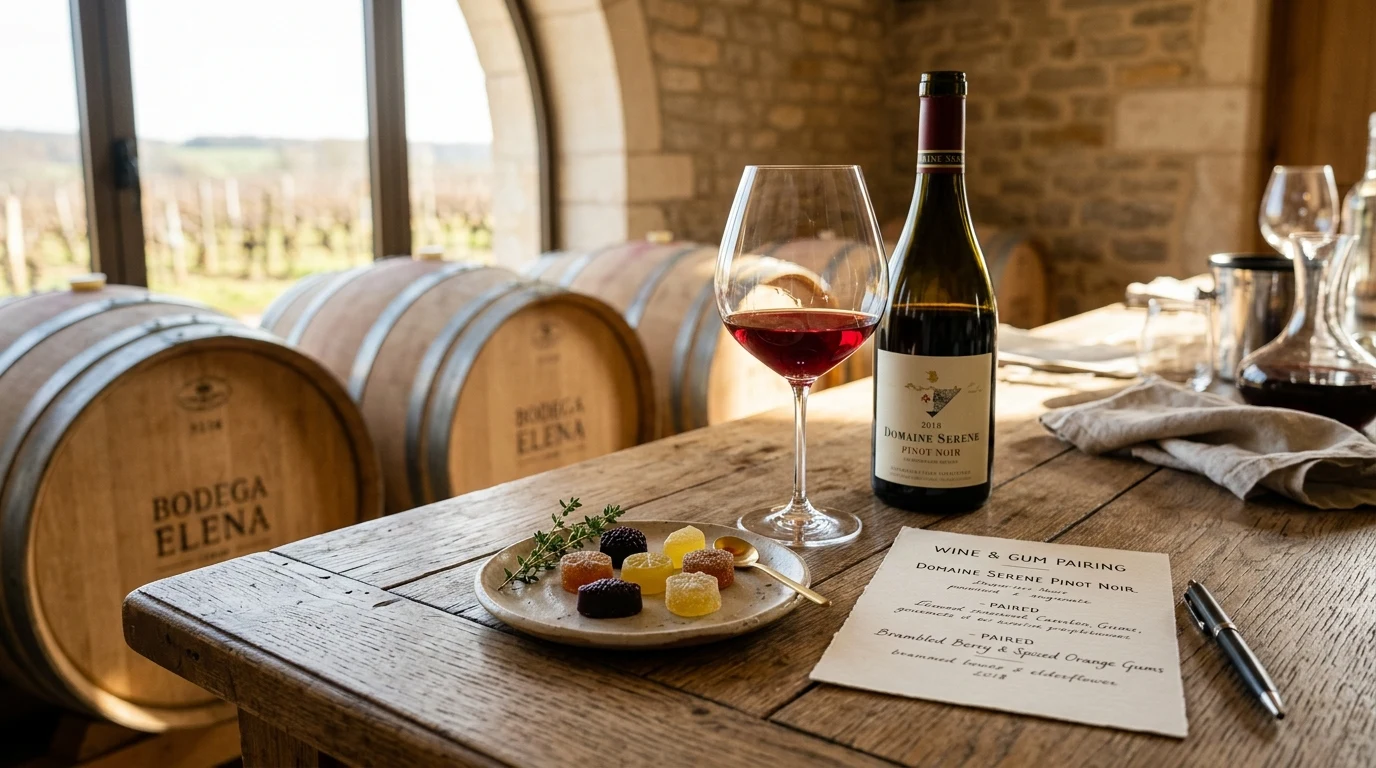
The enduring appeal of wine gums lies in sensory science. Much like visiting an estate cellar—such as exploring acclaimed California wine estates or assessing classic wine gum flavor balance—savoring a wine gum relies on olfactory retronasal aroma and prolonged palate contact.
Whereas modern gummy bears rely on high gelatin elasticity designed for rapid chewing, traditional wine gums use a denser modified starch matrix that resists quick mastication. This slow dissolution temperature allows the natural tartaric and citric acids to unfold gradually across the tongue, replicating the primary, secondary, and lingering fruit finishes celebrated during formal sommelier tastings.
Frequently Asked Questions
Do wine gums contain any real wine or alcohol?
No. Commercial wine gums produced by Maynards, Waterbridge, and Gustaf’s are completely non-alcoholic. The names stamped onto the candies refer to the historic flavor profiles and the intended slow savoring method rather than actual alcoholic ingredients.
Who invented the name ‘Wine Gum’?
Charles Gordon Maynard coined the term in London in 1909 to market a sophisticated, adult confection that could compete with alcoholic beverages in social settings as a dignified alternative to pub drinking.
Are modern wine gums suitable for vegetarians?
Traditional formulations by Maynards utilize animal gelatin. However, several modern European producers—including M&S (Marks & Spencer), Vinoos, and Katjes—have reformulated select lines using fruit pectin and modified starch to produce 100% gelatin-free and vegan wine gums.
Get our latest guides, news, and insights highlighted in your Google Search & AI Overviews.